Exhibition: Bridging Technology and Reality in the Field
February 23rd - March 24th 2026
Atrium - The Hague Municipality: Spui 70, 2511 CB Den Haag
In a world where crises unfold faster than ever, a new role has emerged at the intersection of technology and human vulnerability: the humanitarian designer. This role exists to bridge innovation with lived reality—to ensure that technology responds not to abstract problems, but to the urgent needs of people forced to flee, adapt, and survive.
Over the past years, Commit Global has been shaping this emerging profession by deploying the first generation of humanitarian designers to conflict zones, refugee camps, and disaster-affected communities. These young and courageous professionals, many of them women, work on the front lines of humanitarian response, translating complex technologies into tools that are usable, safe, and life-saving.
Their work turns innovation into action. It connects systems to people, data to decisions, and digital solutions to real-world impact. More importantly, it challenges us to rethink what responsible technology looks like when lives are at stake. We hope their journeys will inspire new generations to engage in this field and to insist that technology remains a force for care, accountability, and justice.
Commit Global is an international organization that builds and maintains technology that saves lives. Our free, open-source digital building blocks have been deployed in Ukraine, Romania, Moldova, Armenia, Georgia Lebanon, Mexico, and many other places around the world—strengthening the capacity of civil society, public institutions, and activists through the thoughtful use of technology.
Through this exhibition, we invite you to see this work through the eyes of our humanitarian designers. These images and stories come from the places where we make technology match the real needs of displaced populations and humanitarian workers.
LEBANON
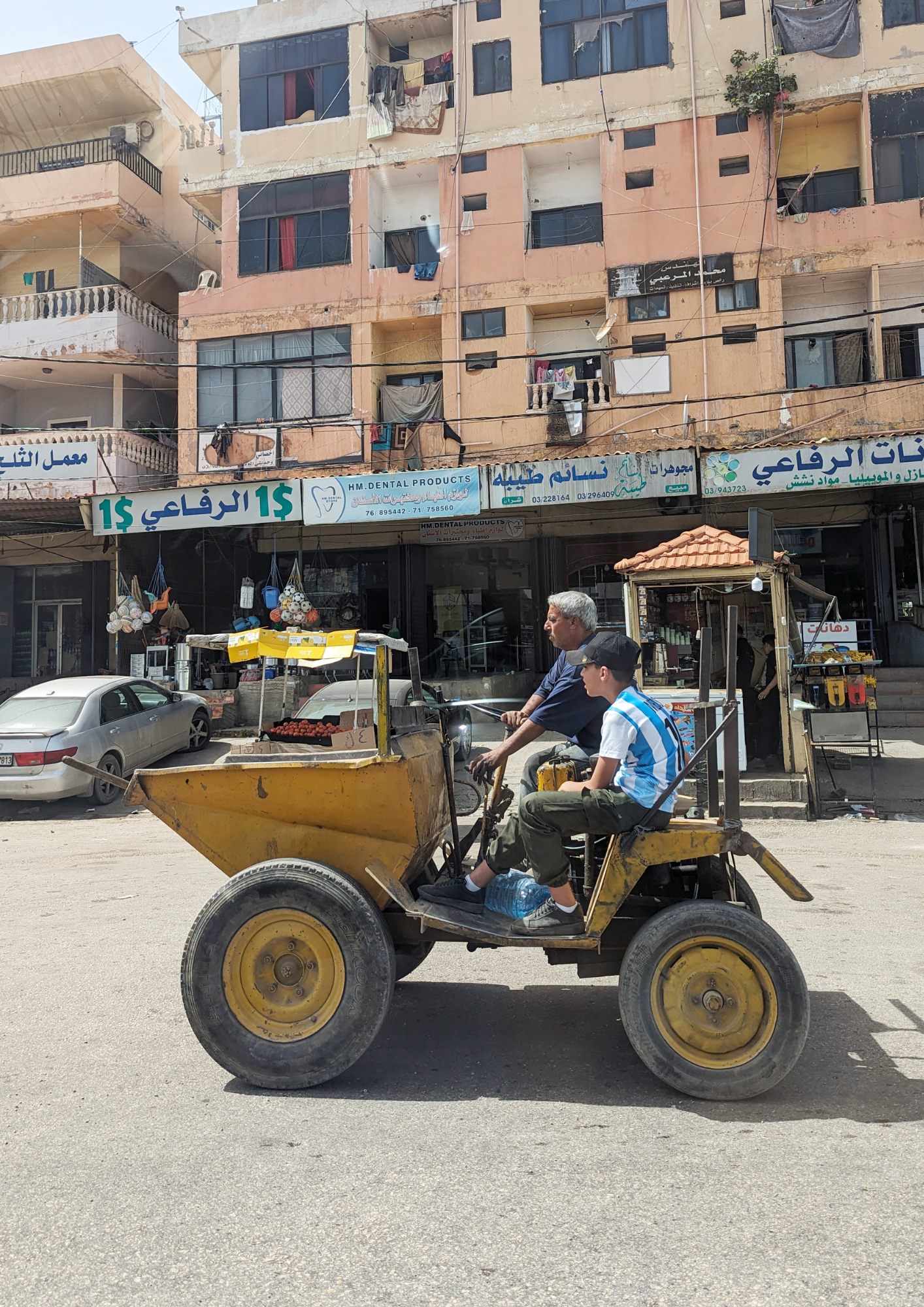
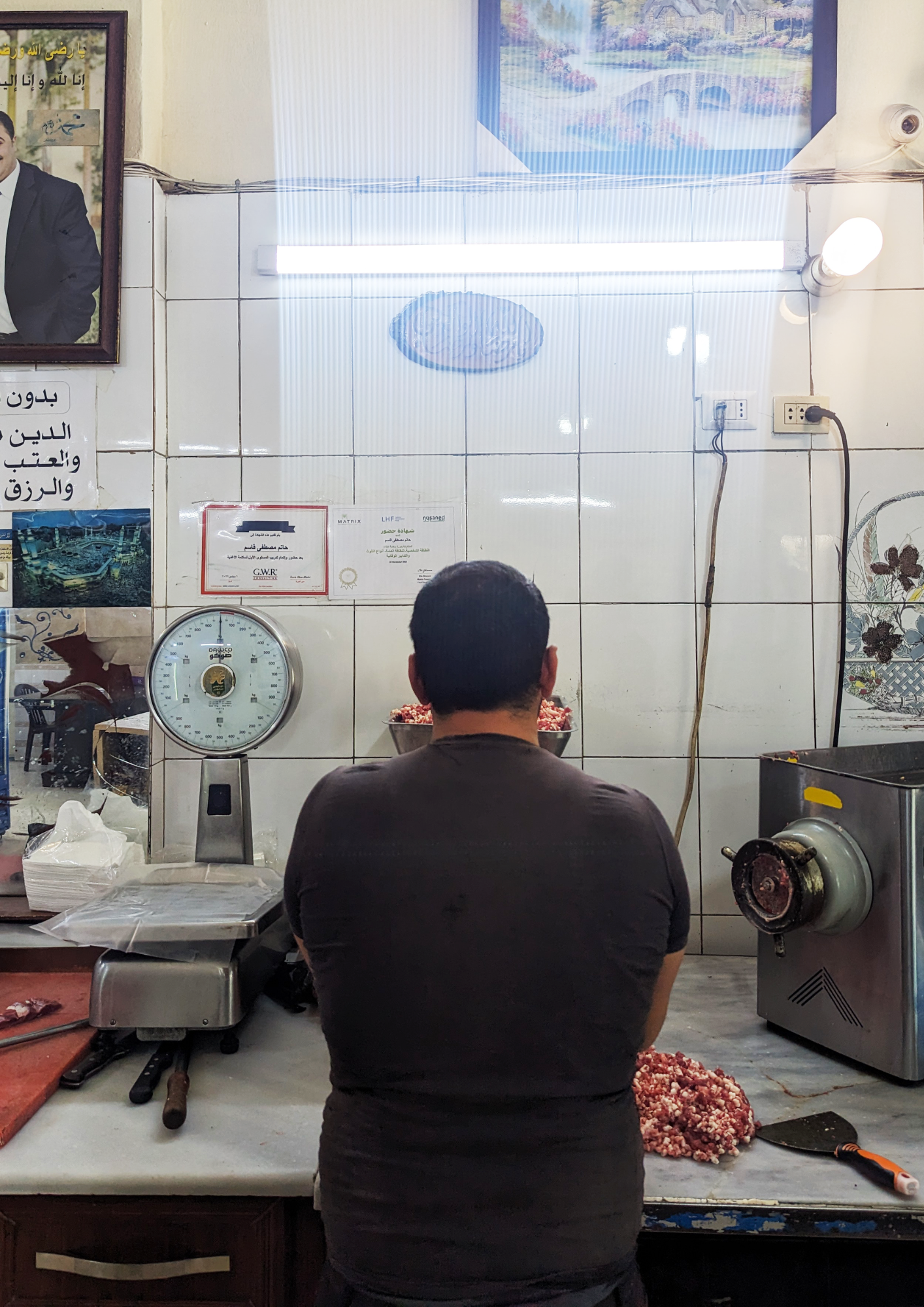
The images below have been taken during Commit Global’s mission in Lebanon in July 2024. They are meant to showcase what day to day reality in the field looks like and the outstanding work organisations are doing to help the most vulnerable. Part of the team that spent several weeks in Lebanon have been Olivia Vereha and Teodora Negru, two of the women aiming to shape technology to be the support infrastructure needed to bring aid to those in need as quickly as possible.
Meet them through the stories they bring to you from the field and get to know their own history.

Olivia Vereha has over 10 years of experience delivering public and humanitarian sector technology. She created and leads the first higher-education programme in citizen-experience design and heads Commit Global’s infrastructure, coordinating humanitarian designers, researchers, and developers, making sure technology remains connected to the reality in the field.

Teodora Chiperi-Negru marked her 24th birthday in Lebanon, on a field mission to understand on-the-ground realities and design scalable solutions for organizations supporting refugees. Her courage and commitment to making technology work in crisis contexts and her capacity to innovate inspires a new generation of UX designers every day.


Lebanon has fallen into war for 35 years out of the last 50. Lebanon has rarely been to war, but war has come to Lebanon over and over again, either from its neighbors or from the sectarian infighting that has torn the country apart for decades.
During our mission in the field in 2024, when our first intervention in Lebanon in support of humanitarian actors began, we discovered a population in dire need of sustainable and scalable solutions, worn out by surgical temporary interventions that reduce predictability for a better future.
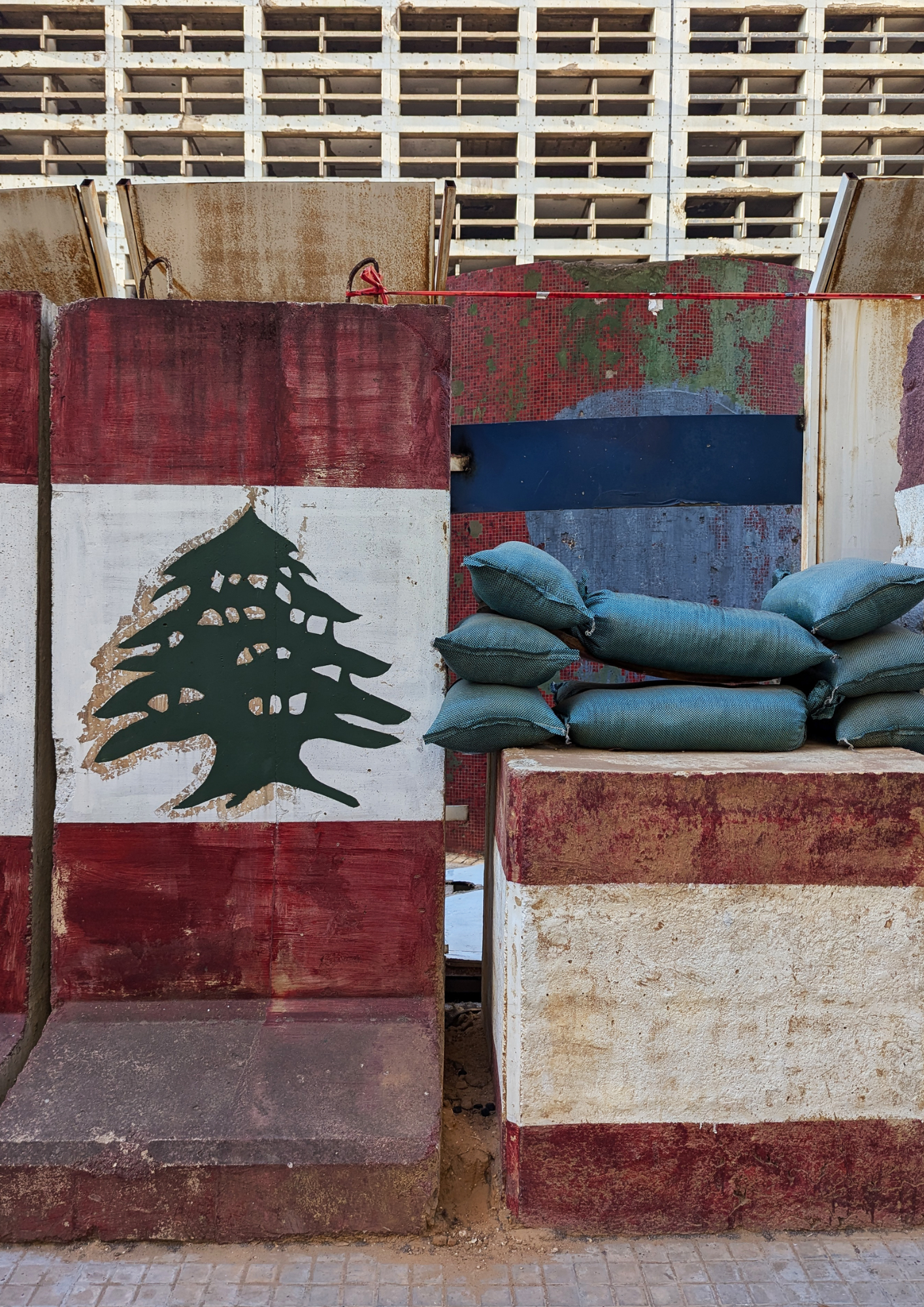

Lebanon is a failed state. A country facing all possible crises at the same time: the aftermath of the Beirut explosion, a sectarian crisis between religious militias, a political crisis, an economic crisis, a financial crisis that has seen a 171% inflation, a refugee crisis from both Palestine and Syria and war in the South.
With virtually no state budget, until just a few months ago, the government operated for years only one day per week and all basic services were covered by local or international NGOs. Most of the public servants who still showed up for work essentially volunteered to keep the country running, while also doing any other job they could to earn a living.
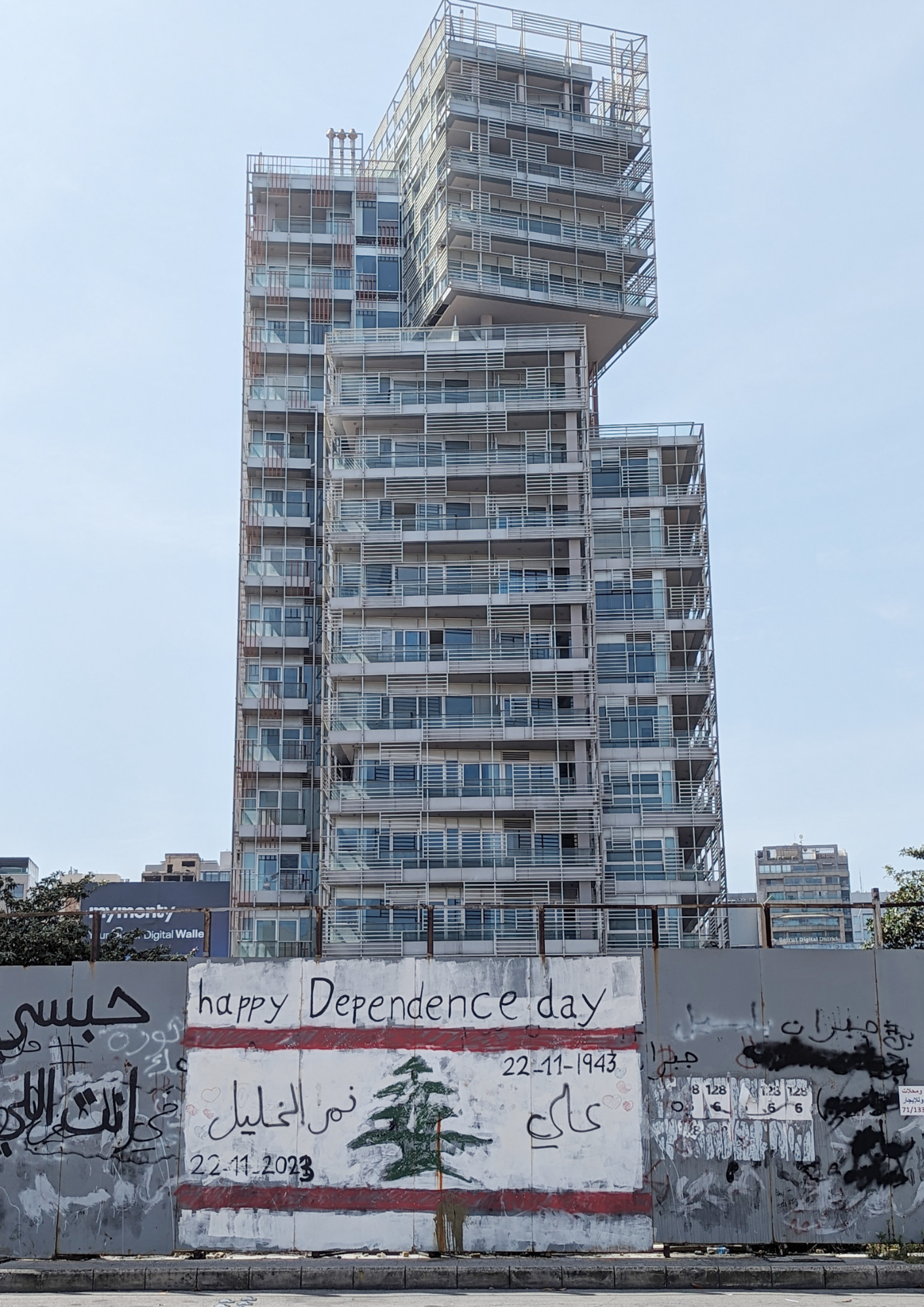
 From the most iconic buildings of the country to every block of flats, destruction has visited Beirut and Lebanon more than any other place in the world, cursed to rise over and over again from their ashes. It is within this landscape that life continues to unfold, under a constant pressure of what tomorrow may bring.
In many places, nature has taken over the buildings that stand tall as witnesses of the hardship their inhabitants have been through.
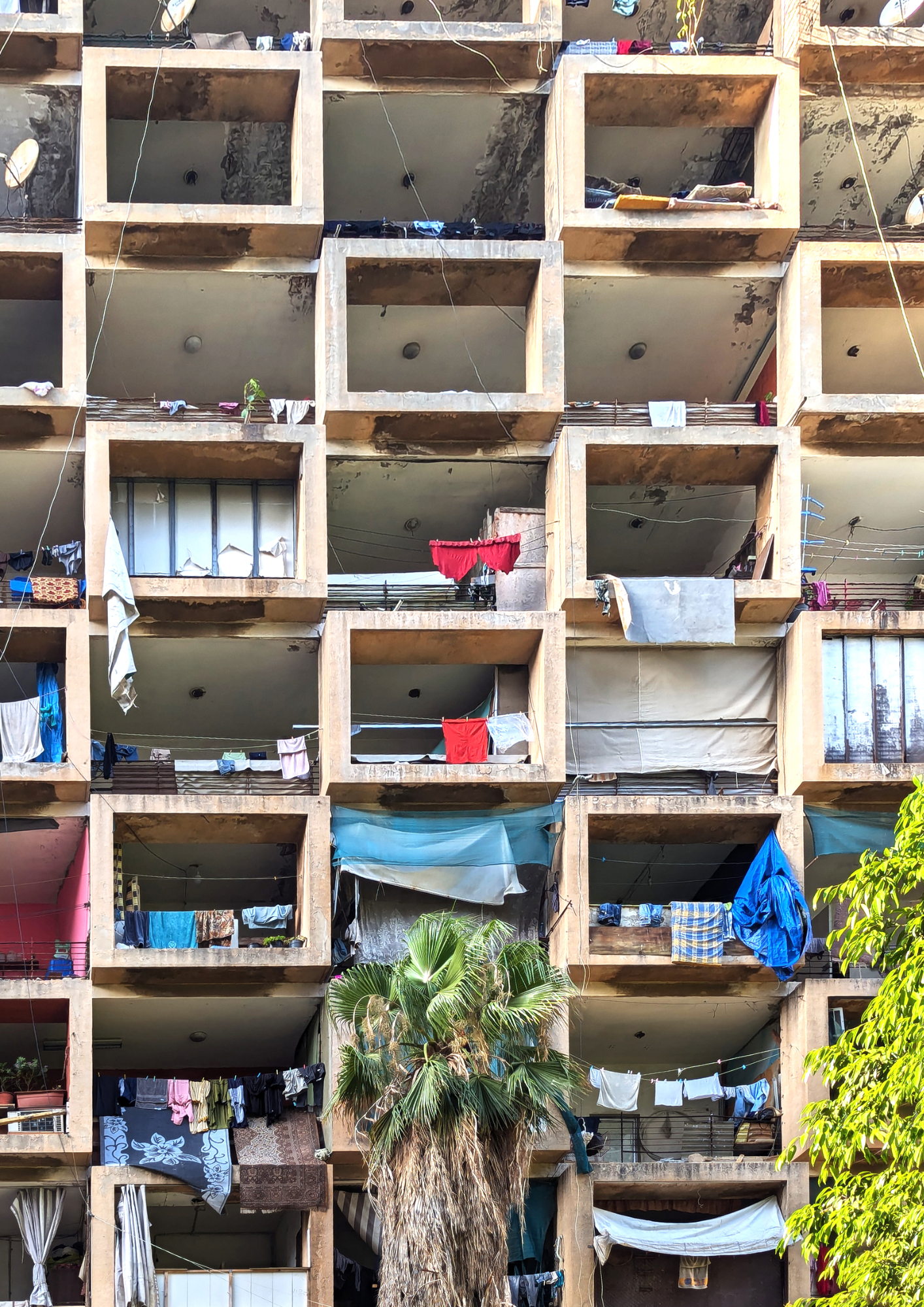
At Commit Global, we build and deliver free, open digital tools that help communities affected by war, displacement, and disasters access essential services, quickly, safely, and with dignity. Designed with empathy and shaped by the real needs of people on the frontlines, our systems support shelters, civil society, and public institutions to respond more effectively in crises and beyond. Powered by donations, our work remains agile in emergencies and sustainable over the long term, enabling us to strengthen civil society and provide life-changing digital infrastructure wherever it’s needed most, always free, always open.

"He'll live, but with a bullet." Twenty years later, the bullet is still there. I have gotten used to the foreign body that resides in my own body. Removing it wouldn't change anything - the war inhabits me in any case.
[Alexandre Najjar - The School of War]
Every single person in Lebanon carries memories of real-life events that many of us are lucky to have never even had to imagine.
Survival and growth are very different here, where the uncertainty of the next day is a constant for everyone. This is the reality faced by the displaced population in the country, regardless of whether they were in the South, the North, or roaming the streets of their astonishing capital, Beirut.
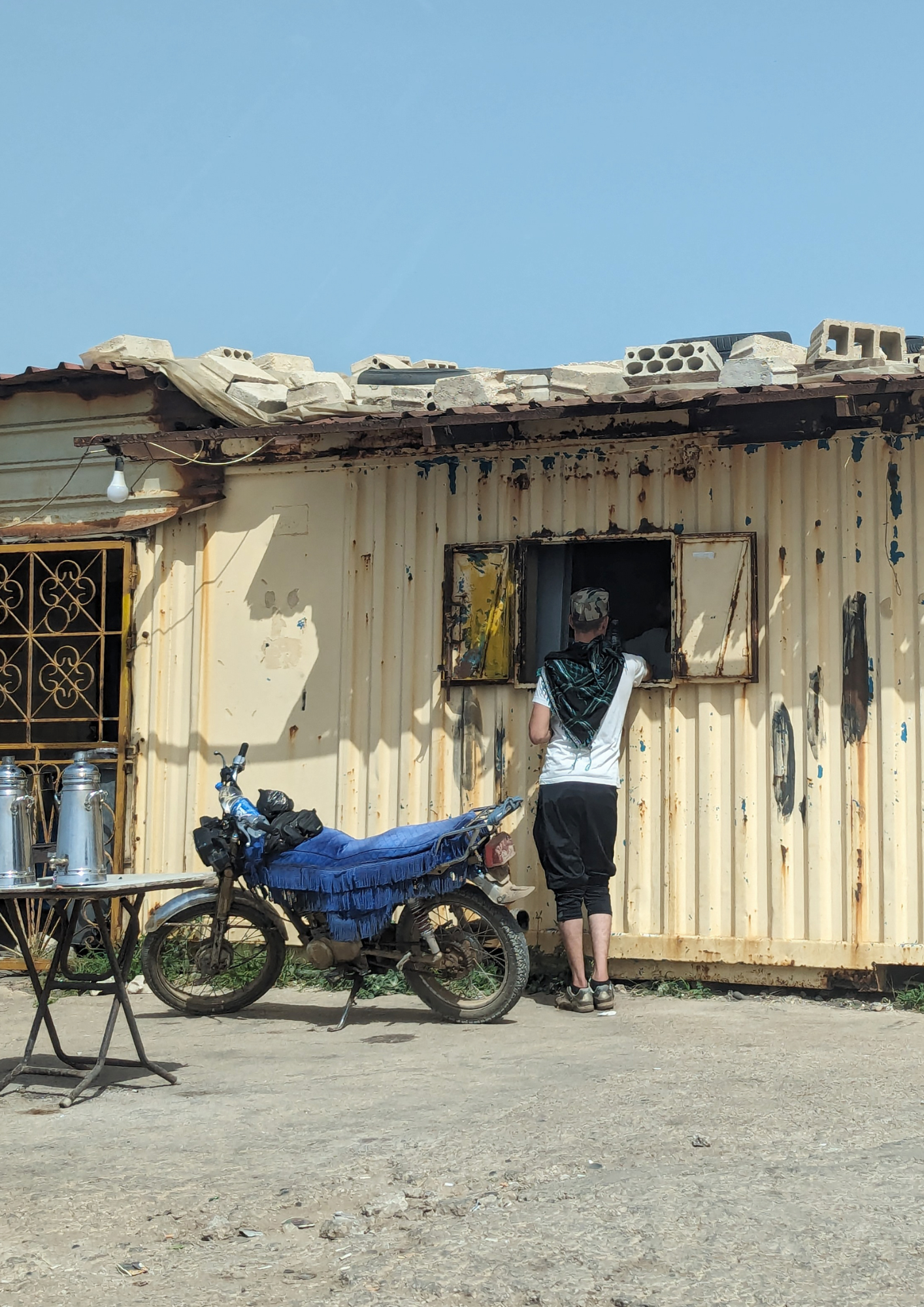
 This photo was taken in July 2024 in a shelter organized inside a school in the South of Lebanon. Families are hosted in former classrooms and have done their best to turn their spaces into homes to feel less separated from their former lives.
Many of the refugees speak of the moment when they left their villages and cities and how they constantly seek to know whether their houses are still standing or what has happened with their relatives and friends.
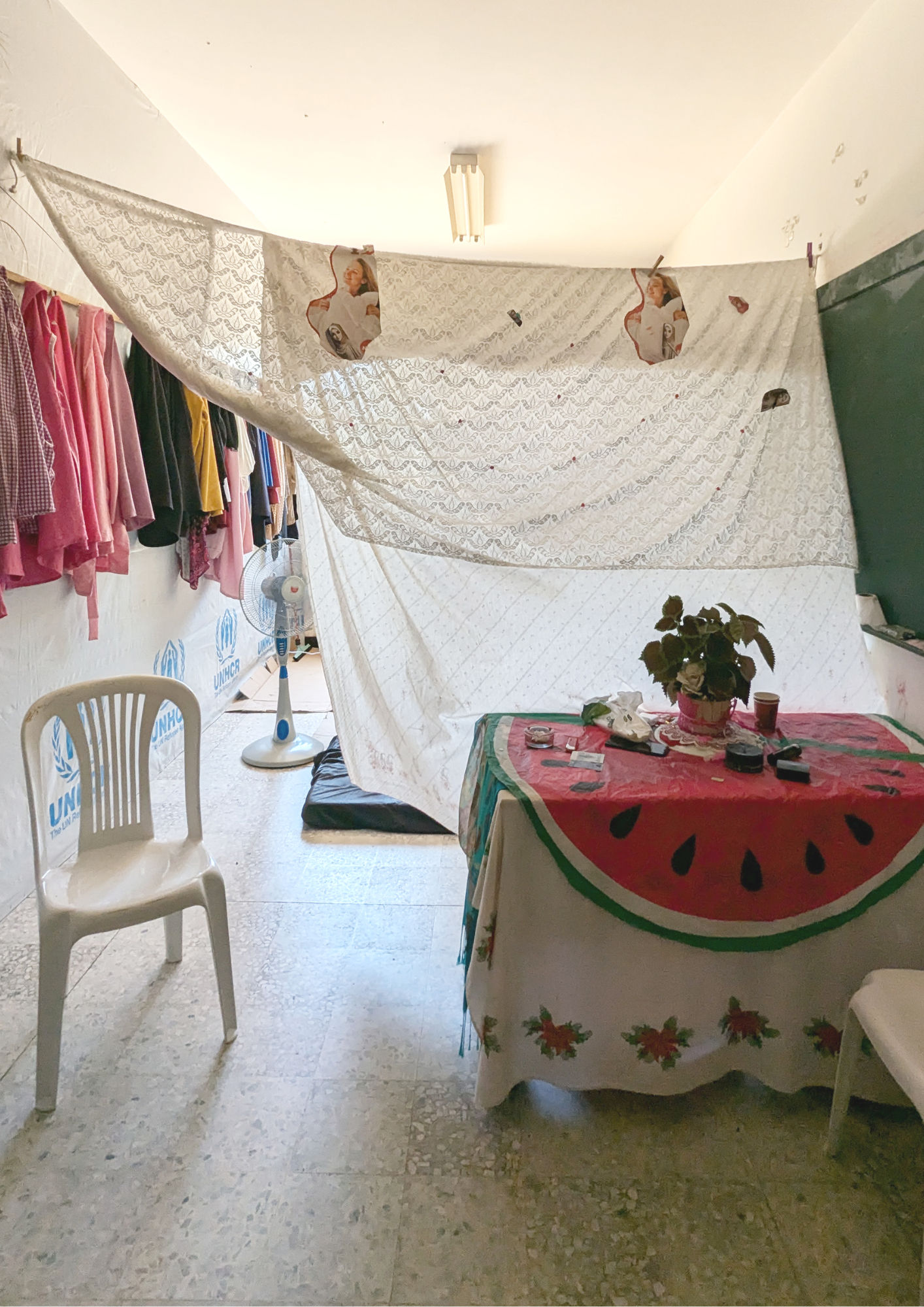

One day I fell in love with a boy who was in love with birds. He could recognize them from their songs. I was telling this to my friend Ali and he told me he could also recognize the different sounds of bombs falling on Beirut.
[Jana Traboulsi - Safir Newspaper, 2005]
Being in shelters does not mean that people are completely safe from war. The areas they are located in can become targets at any moment, and everyone is aware of it, always paying attention, always listening while going about their day.
Organisations in the field are ready at any moment to relocate people to other emergency shelters should it be necessary.
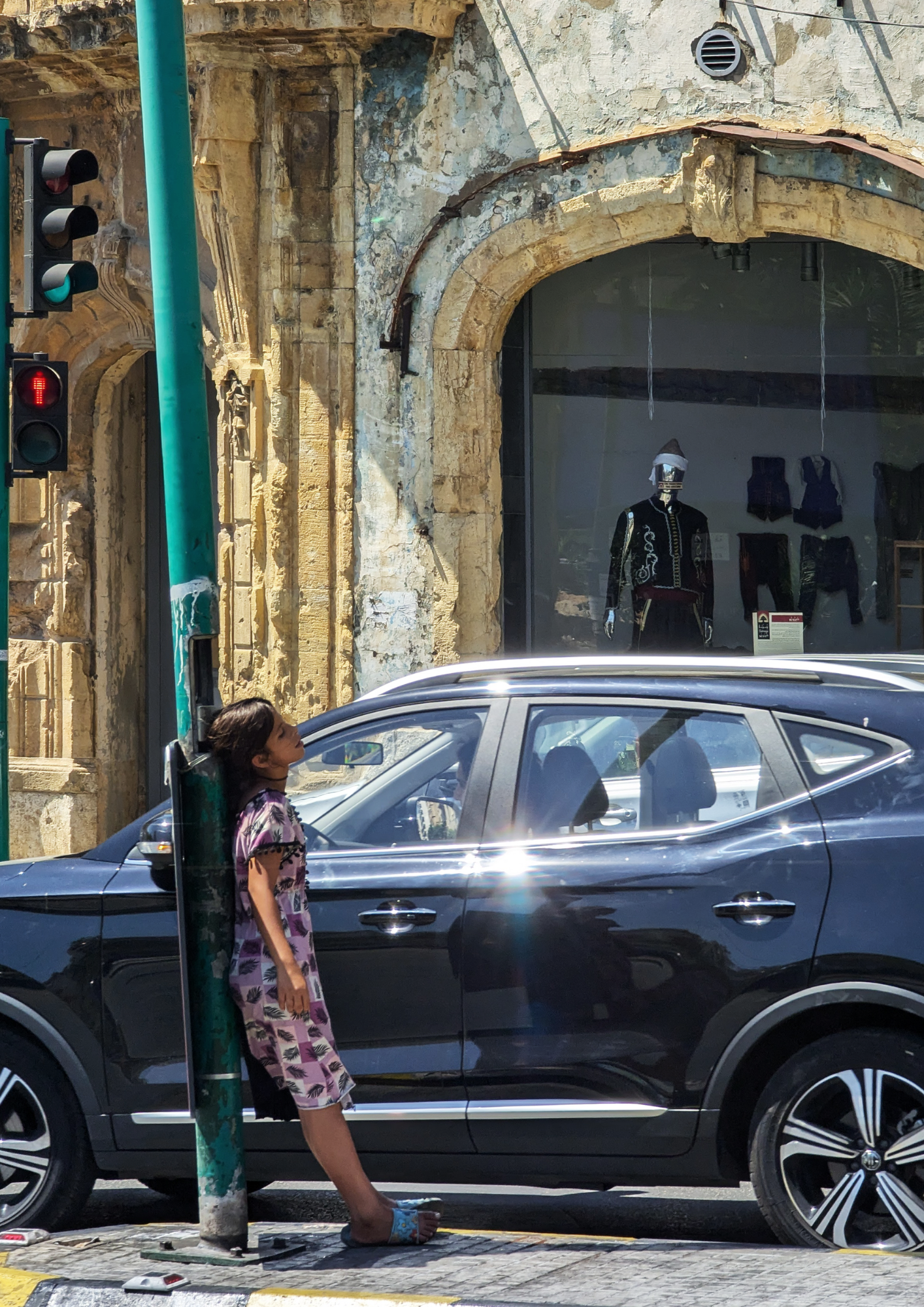

Nusaned is a non-profit organisation that works across the entire country, trying to ensure resources for shelters, to enhance the chances of communities to gain sustainability through voucher programmes, training and aid delivered through mechanisms meant to stimulate the little local economy that still exists.
They are an incredible example of courage and creativity, turning every programme into a chance for a better life for thousands of people. We work with their team to create systems that can assess needs in the population to improve aid delivery, shelter reconstruction and to reduce the time and resources spent on filed operations. These systems can be scaled and reused in other crisis areas around the world.
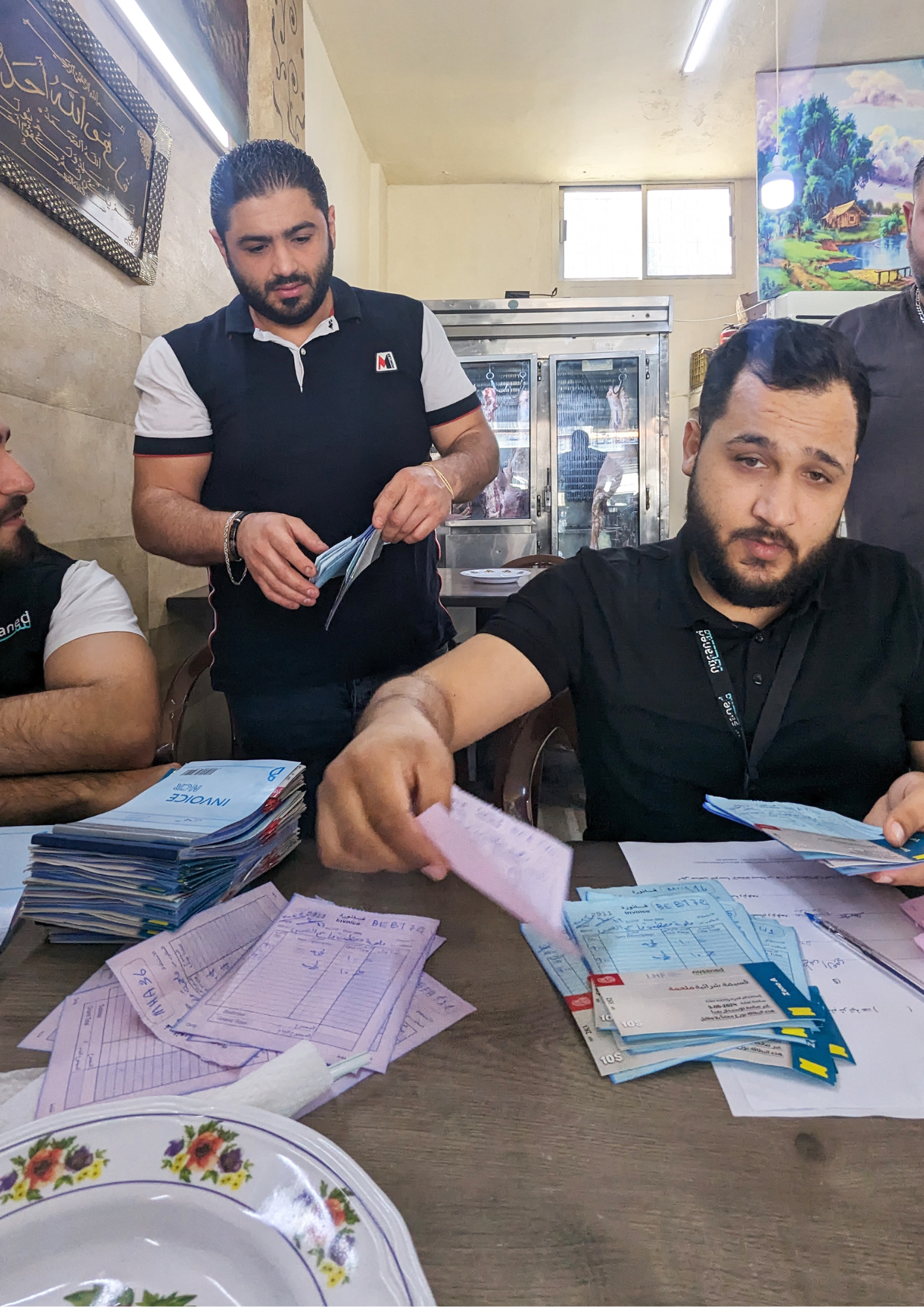

It was during the war that I learned to appreciate the value of water. Waiting in line with an empty can, I came to understand that it is as vital as the blood that runs through our veins. Before the war, I used to waste water recklessly; I did not think it was of any value. I scorned the odorless, colourless liquid and, to be honest, I preferred soda or alcoholic drinks. One day, at the height of the fighting, the water disappeared from our faucets.
[Alexandre Najjar - The School of War]
The shelters bring together people from all over Lebanon and the surrounding countries. But also outside the shelters, one of the most critical needs is access to medical donations. We are building a system to track and distribute these vital items according to the needs on the ground and make sure nothing goes to waste in the scarcity that governs the whole country.
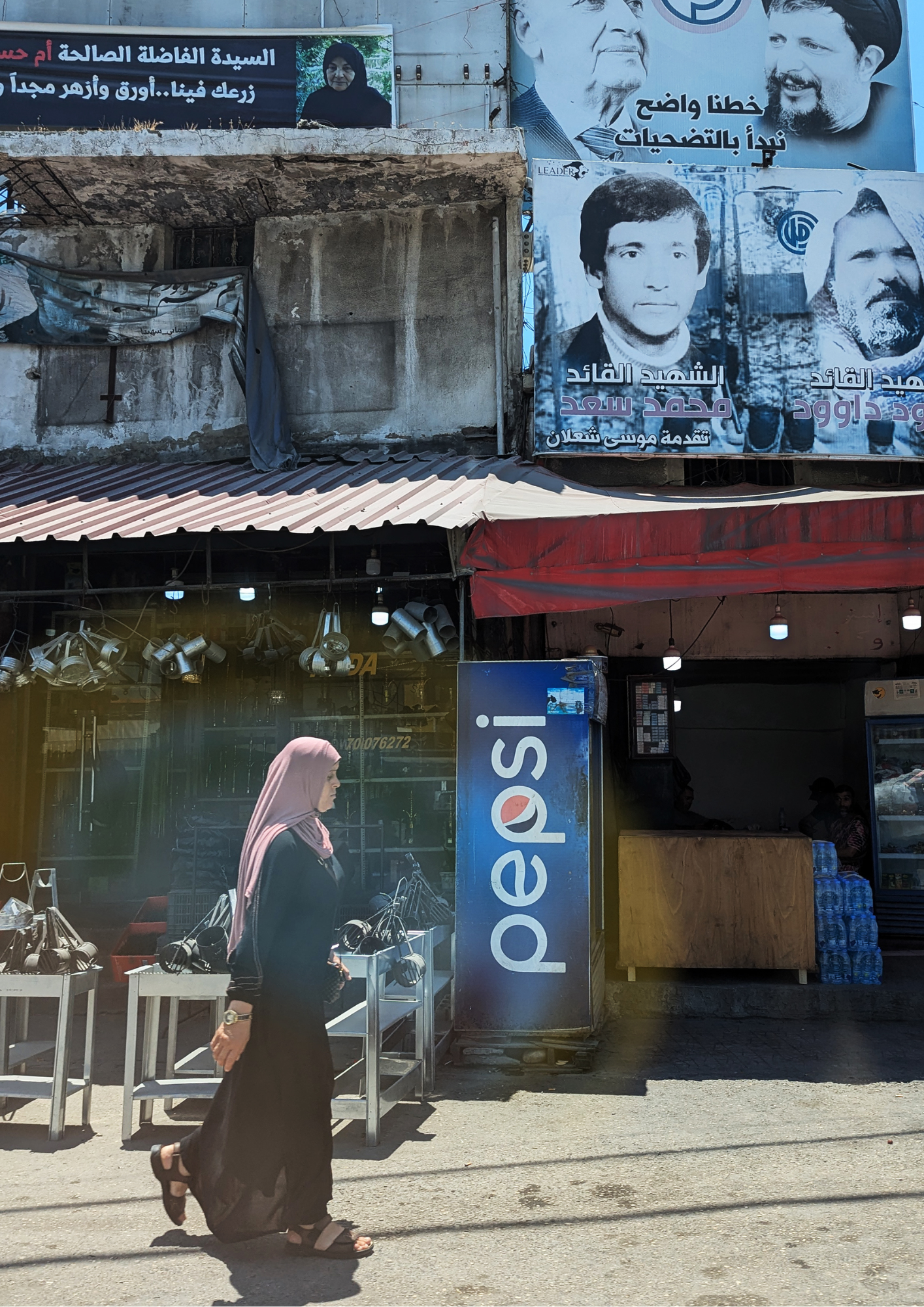
"Do you remember your first corpse?" Uncle Michel talks about my first corpse as if it were my first kiss.
"Yes. I was nine."
[Alexandre Najjar - The School of War]
Many organisations in Lebanon are focused on crafting better chances for the younger generation. Anera, a non-profit organization based in Beirut, is training hundreds of young adults from vulnerable communities to help them access better jobs and opportunities.
Other organizations are focused on providing mental health services and support and together we are working on scaling our digital tools for PTSD help and other systems in the region.

These trials have given me a new understanding of happiness. A day without bombings, a bridge that isn't under sniper siege, a night without a blackout, a road without barricades, a clear sky across which no rockets shoot... for me all of this will henceforth be synonymous with happiness.
[Alexandre Najjar - The School of War]
Danger seems to have been removed from the usual vocabulary for all the heroes who try every single day to bring relief to those in need. NGOs across Lebanon make sure as many people as possible have access to medication, basic items, medical services, education, and safer housing. Despite the threats they face, all of these humanitarian workers are in the field every day, from one vulnerable community to another, to bridge the gap between disaster and safety. Our digital infrastructure can immensely enhance their capacity.
MEXICO
Commit Global’s team has been on an extensive mission in Mexico in Tijuana with the purpose of understanding the needs on the ground and providing the necessary digital infrastructure needed to all actors providing relief at the border, in the shelters that host thousands of migrants. Salome Margvelashvili and Maria Leuștean are two of the members of our team who create the seamless design of our tools and ensure that every single organisation or user finds their way through the digital instruments we provide for free. Meet them here and discover their stories.

At just 25, Salome Margvelashvili left her home in Georgia to join Commit Global and bring free technology to people in need. On her first mission in Mexico, she broke language and cultural barriers, connected with shelters and refugees, and trained dozens to use our digital infrastructure. As one of the first humanitarian designers, her dedication is a driving force for change for everyone in the field.

Maria Leuștean joined Commit Global straight from college, through our citizen-experience design programme. At just 22, on her first job, she became a role model for us all. Her kindness, rigor and work ethic power the digital infrastructure used by thousands of non profits worldwide. Maria is one of the leaders of her generation.

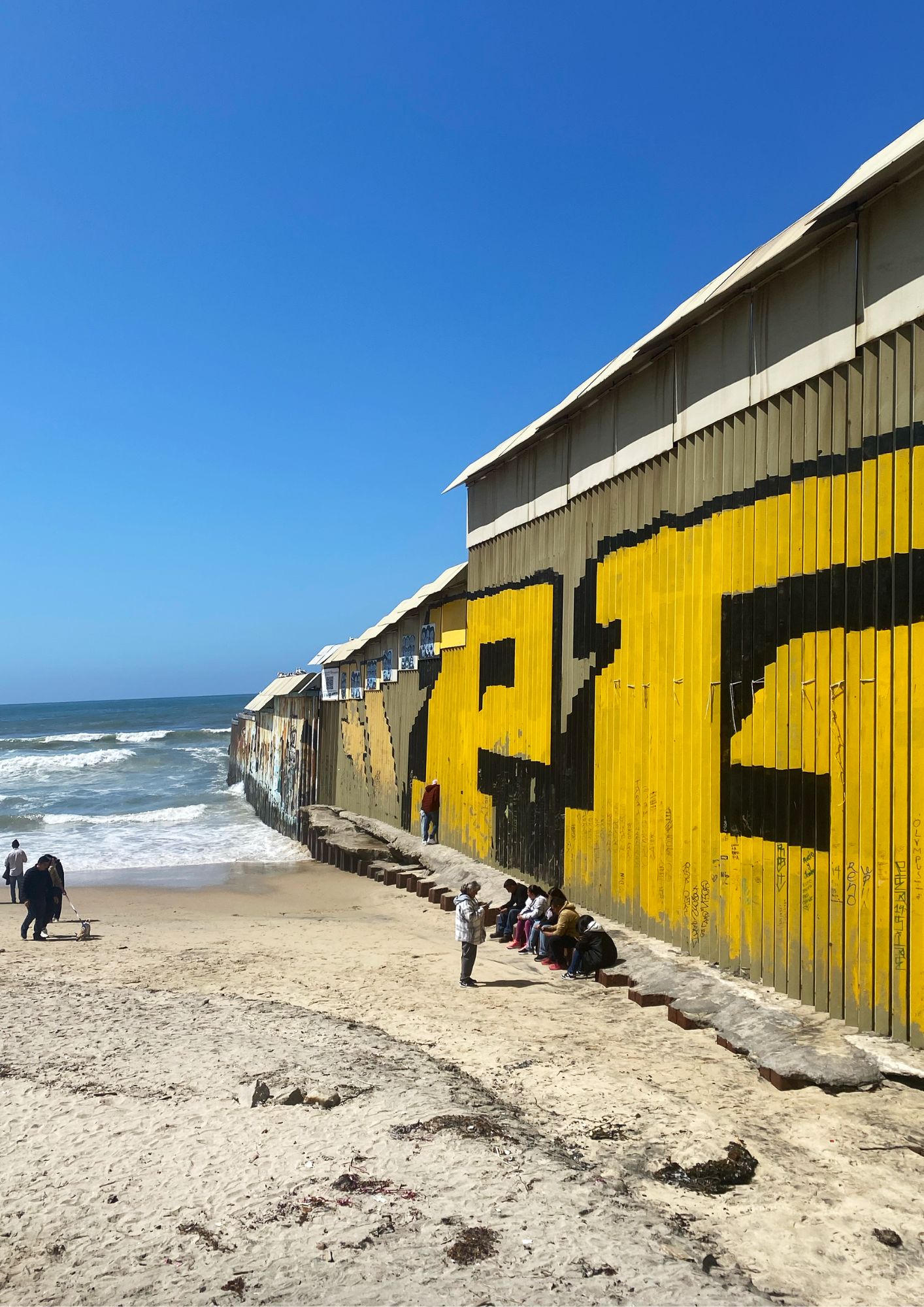
Since 2025, this wall has become more impenetrable than ever. In Tijuana and across Mexico, tens of thousands of migrants are suspended in a prolonged state of waiting, hoping for asylum in the United States, a prospect that now feels unreachable. With no viable path forward and no safe option to return home, many are forced to remain and attempt to re-build their lives where they are. Some flee poverty and the absence of basic services, many others are escaping violence and imminent danger. As hopes of reaching the United States diminish, more people turn their eyes toward alternative destination countries.
This uncertainty has fueled a new and deeply troubling phenomenon: the rise of online and offline scammers who exploit desperation, demanding large sums of money in exchange for false promises of documents and safe passage.
Some people have been deported back to Mexico after decades of living in the United States.
His hope is to be reunited with his family, who remain on the other side of the wall. Before 2025, this could mean weeks or a few months, but now the idea of being allowed to go back seems almost impossible. Just like him, many spend their nights in the shelters ["albergues"] and the days looking for work and trying to earn a minimum living to be able to continue to benefit from a warm bed.
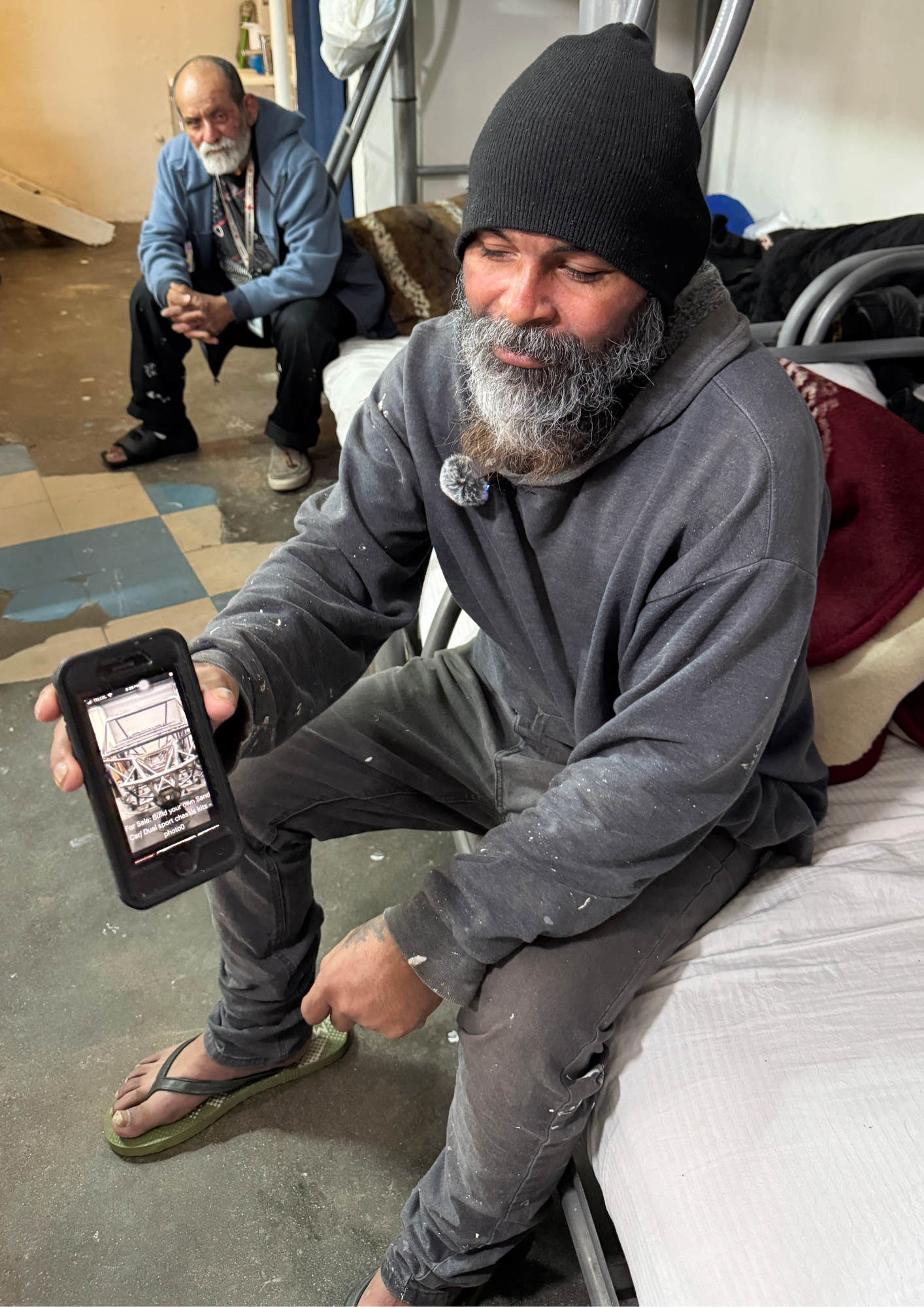
The 32 shelters in Tijuana try to ensure that every single person in need of help, regardless of where they come from, is being accommodated and supported in these difficult times in their lives.
The spaces, however, are small, crowded, and can almost never ensure proper conditions for all the specific needs. For migrants with disabilities, it is even more difficult to find a place that can provide the minimum level of accessibility they would need.
Even so, the community always finds a way to help everyone have a roof above their heads and a minimum of comfort.
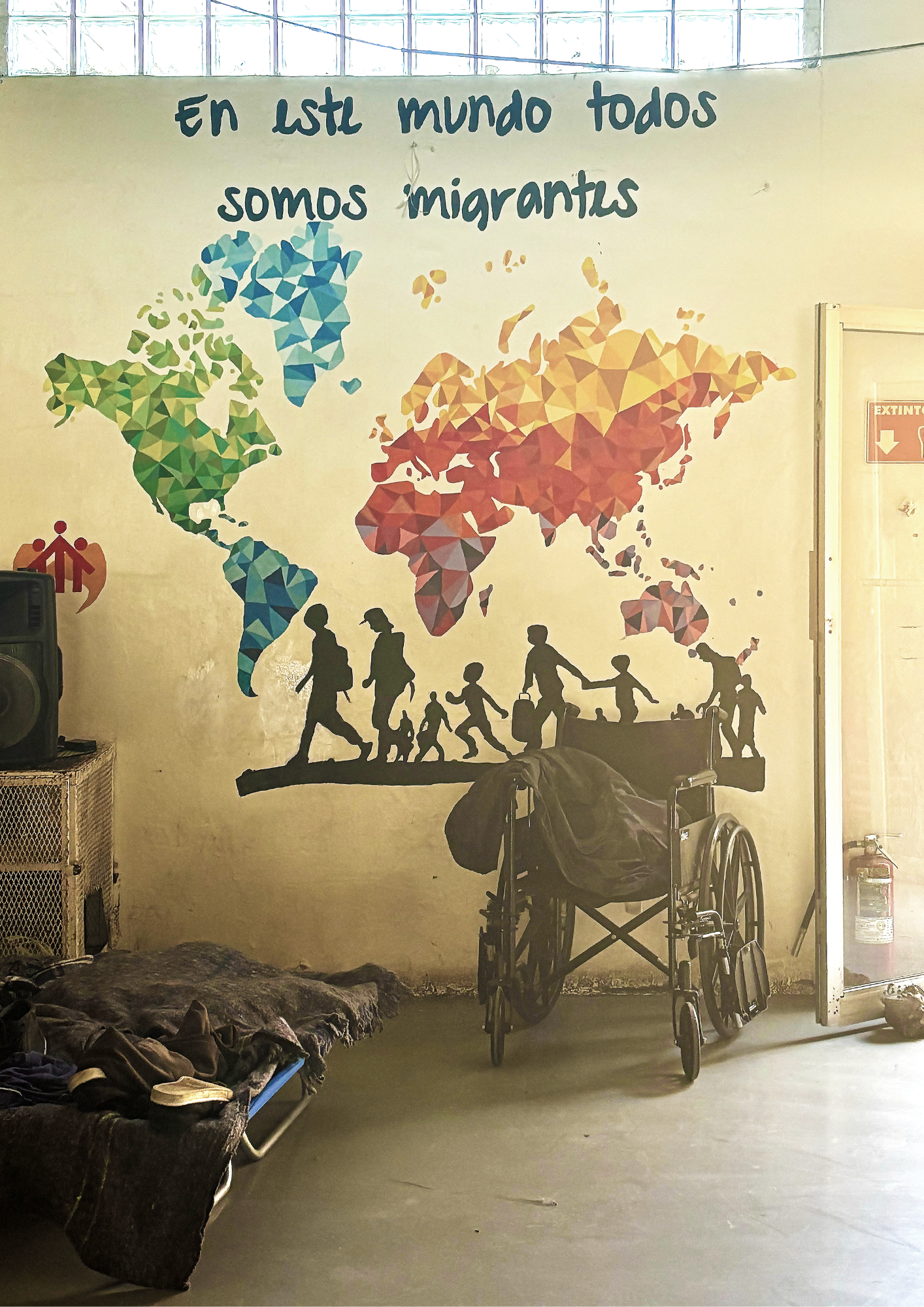
No two shelters are alike. Some are lucky to have beds, some create "micro-rooms" out of bunk beds tied together, and a group of two or three bunk beds can host a larger family if it is allowed. Otherwise, the rule is that women and children sleep separately from men. Other shelters are just former yards, with improvised roofs where tents are nested one next to the other so that families can sleep together and have a minimum level of privacy.
Today almost all shelters in Tijuana are connected through "Un techo" (One Roof) the shelter management system we have deployed for free in Mexico. The platform allows migrants to find available spaces in shelters and NGOs to better coordinate and refer migrants securely from a shelter to another. We are also supporting the organizations that need it with a website builder that helps them collect donations to continue to afford paying for food and monthly bills.
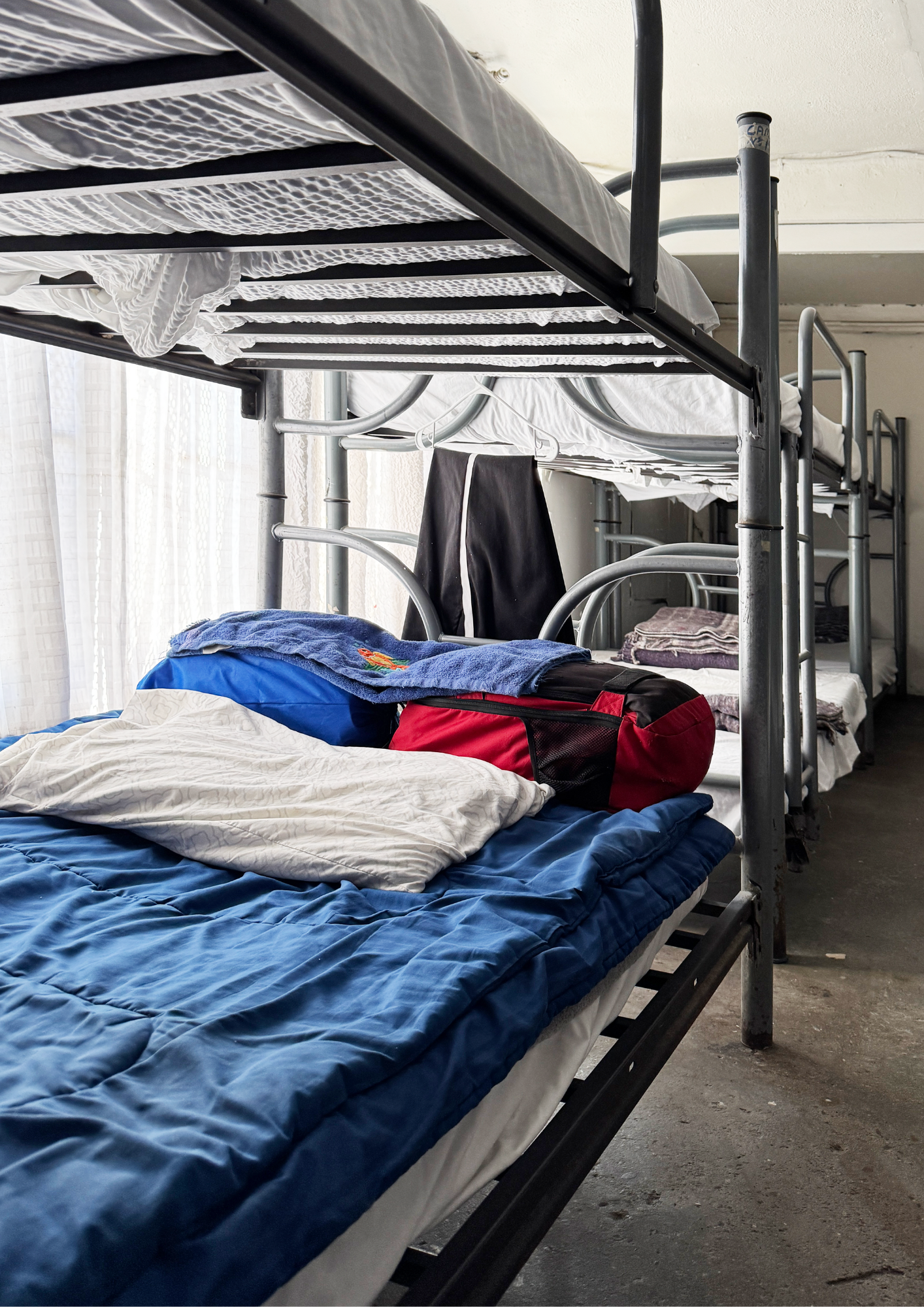
Because of the lack of space, the amount of personal items one can hold in a shelter is minimal. At times you are not allowed to have more than a suitcase and another bag because there is simply not enough space for everything.
Many shelters are temporary, which means that you have to check in and check out every single day, therefore, having to always carry your belongings is an immense burden for them.
This image is taken in a night shelter where people check in every day after 4 pm to spend the night before heading out to try to find any work to help them survive.
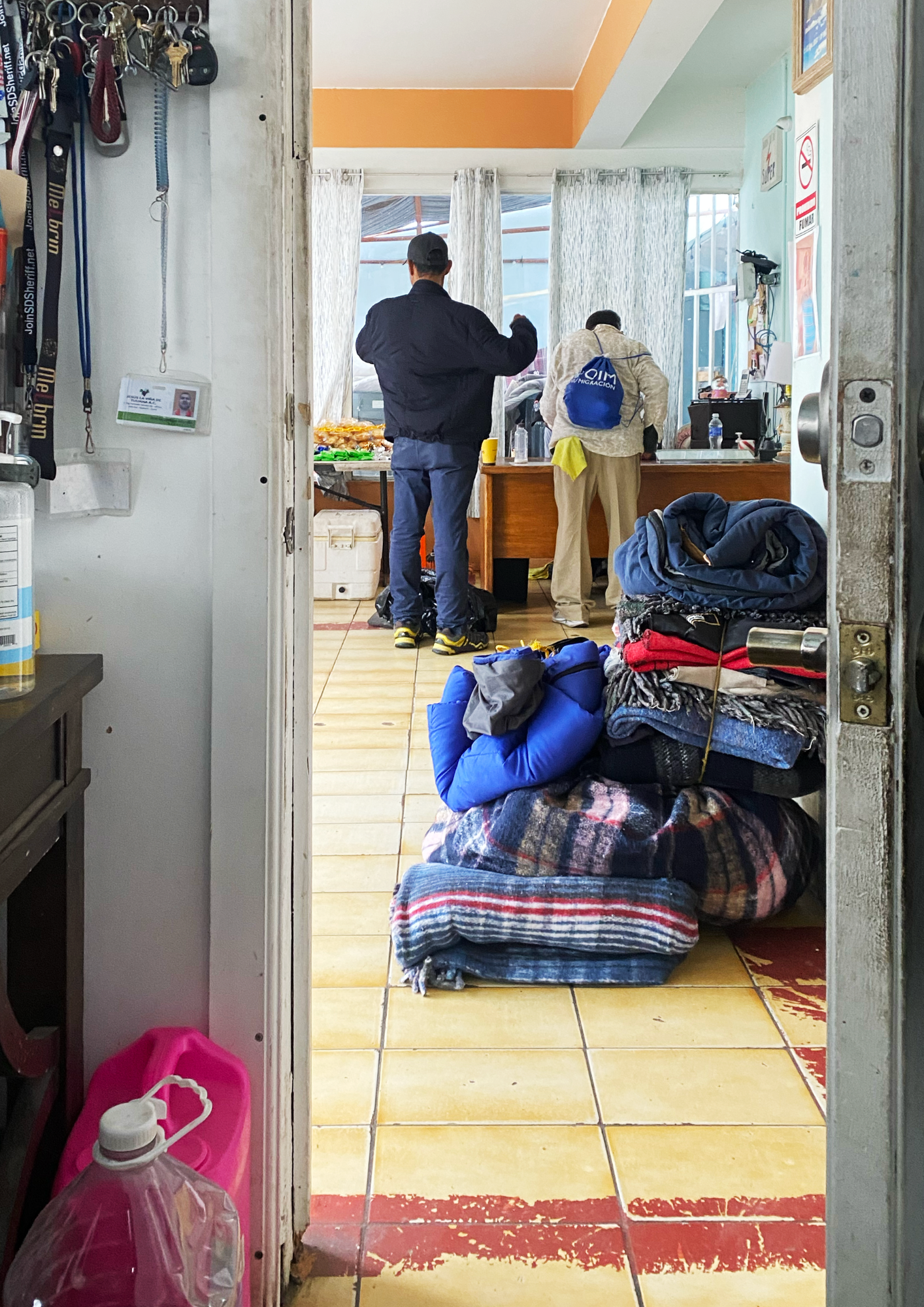
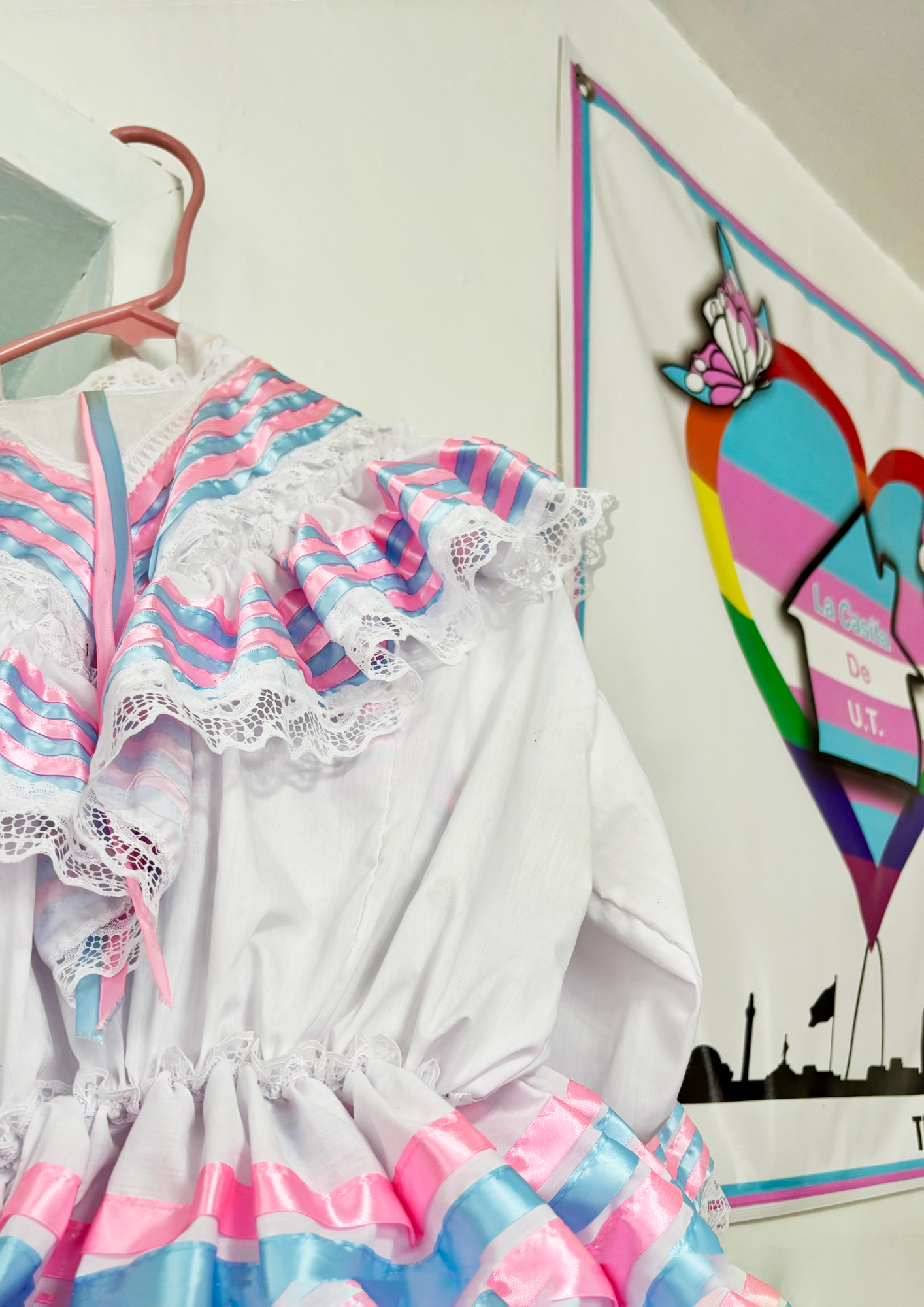
In Tijuana, there are five different shelters dedicated to the LGBTQ+ community. Casita UT is a shelter supporting trans women with accommodation and access to continuous services.
In another shelter, Jardin de Mariposas, Jamie hosts members of the community. She returned to Mexico after 23 years spent working for the Municipality of New York and is now in charge of this shelter that used to be managed by her mother.
The challenges they are facing are bigger and bigger since most of the donors that used to support these communities are now afraid to continue their aid programmes due to restrictions and political backlash.
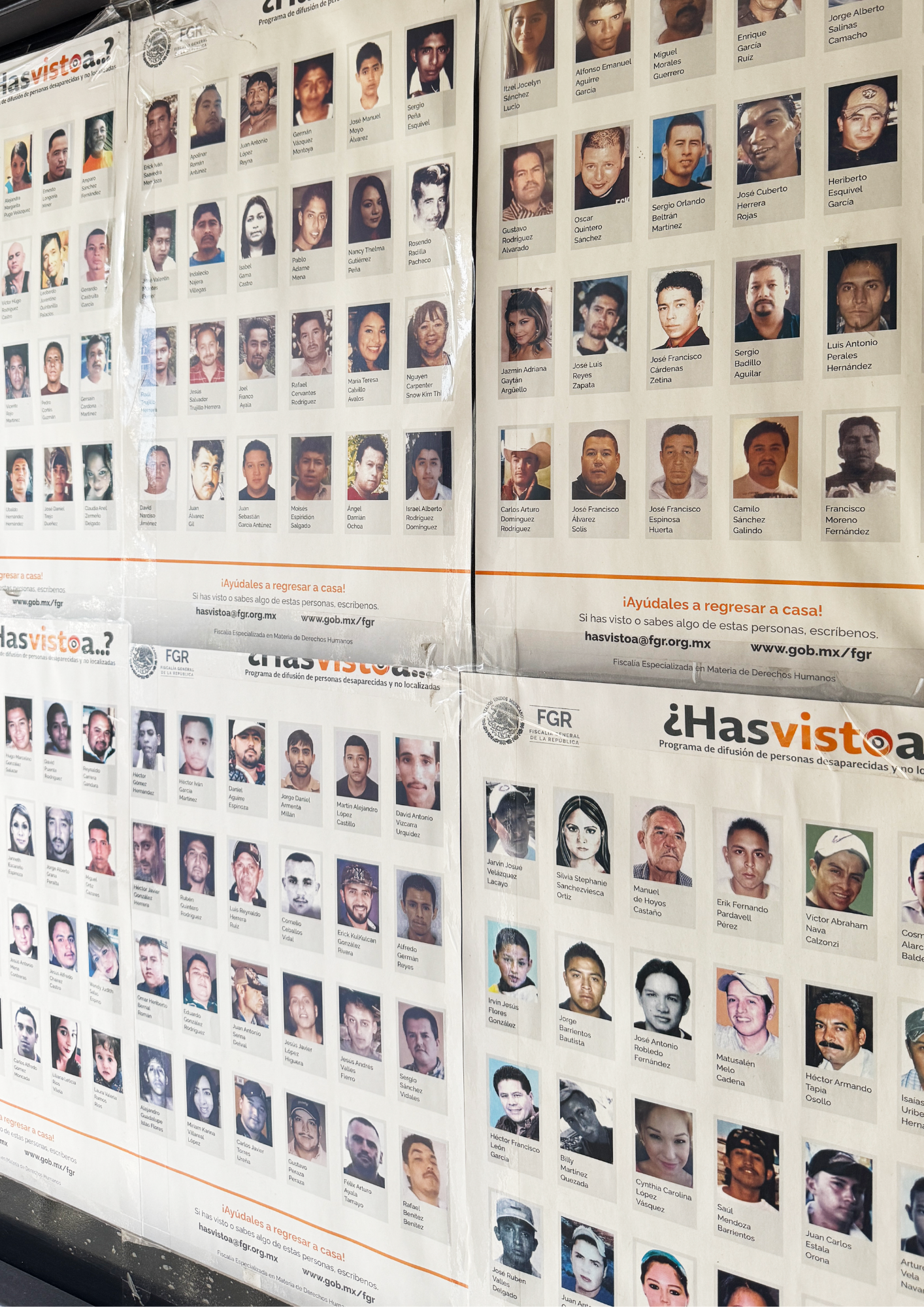
In almost every shelter, on the walls, there are posters with missing people. The Commission for Missing People from Baja California tries to reunite people with their families and search for missing persons all across the state. Now this work is being done only in the field, and with the help of a social media page, trying to collect critical data.
This is an example of a poster placed on the door of a men’s shelter in Tijuana in the hope that anyone who has information about any of the missing people here will help the commission find them and reunite them with their families.
For the first time, they will have a digital solution to support them in broadcasting their messages and search bulletins, and better collect the information from the shelters.
Most shelters are connected to churches, and the aid has been coming from the local community for more than a year now, since almost all funding has been halted both by the US Government and by the local one.
The shelters are managed by volunteers, and many of the migrants self-organise with cleaning, kitchen shifts, security, and much more. For migrants, it is a way through which they try to ensure sustainability and care for the spaces that shelter them, as well as for each other.
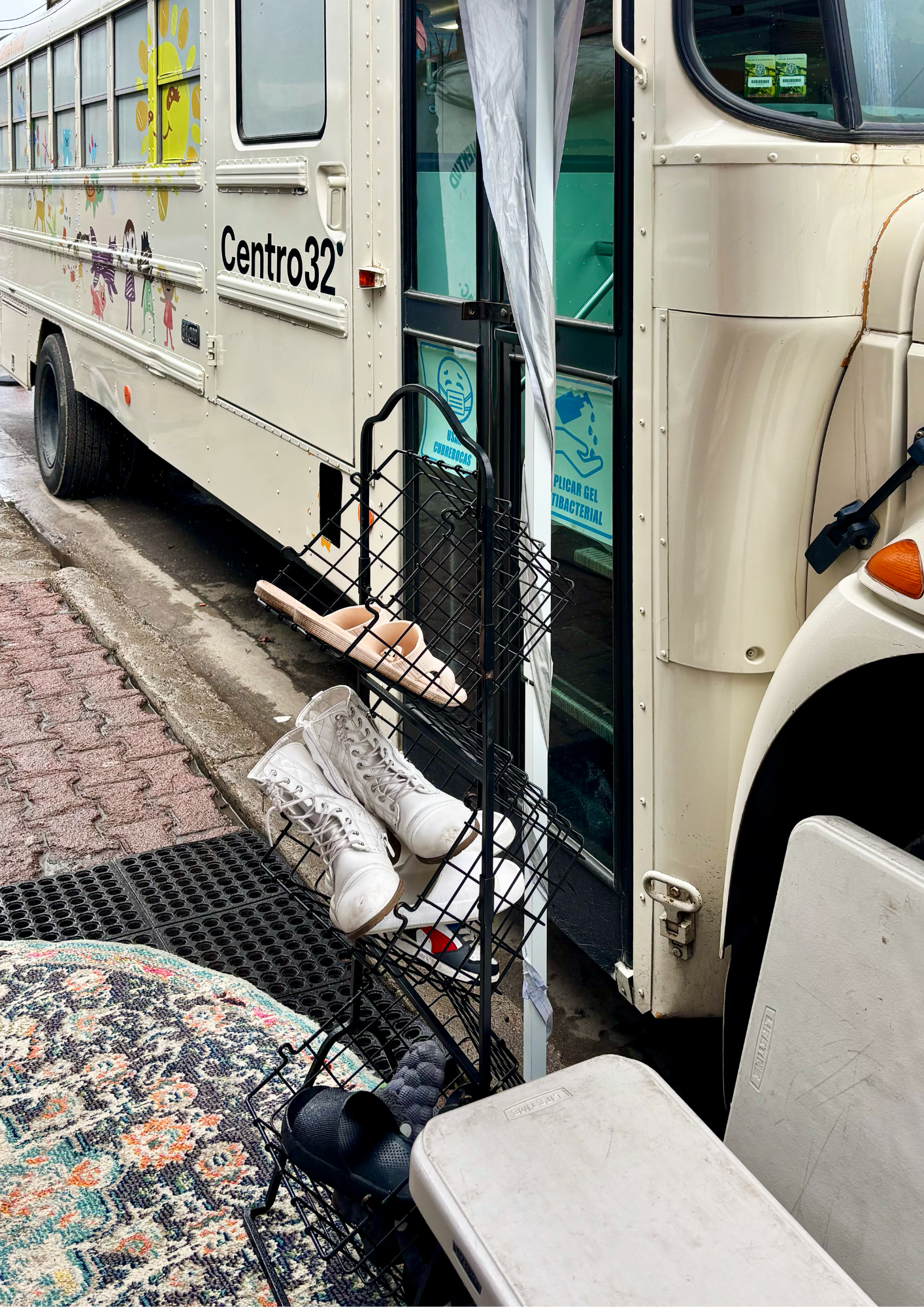
Centro32 is an organisation providing free mental health services to migrants.
The Baby Bus is just one of their projects where they have reconditioned a bus they park in front of the shelters for mothers with very young children to come in and take part in group therapy activities, educational workshops, and to find a bit more relief.
The need for resources and scaling power is immense, especially when it comes to such services that bring relief to those who could never afford this much-needed support. We are working with Centro32 to deploy for them a case management system to better manage their beneficiaries and streamline their work.
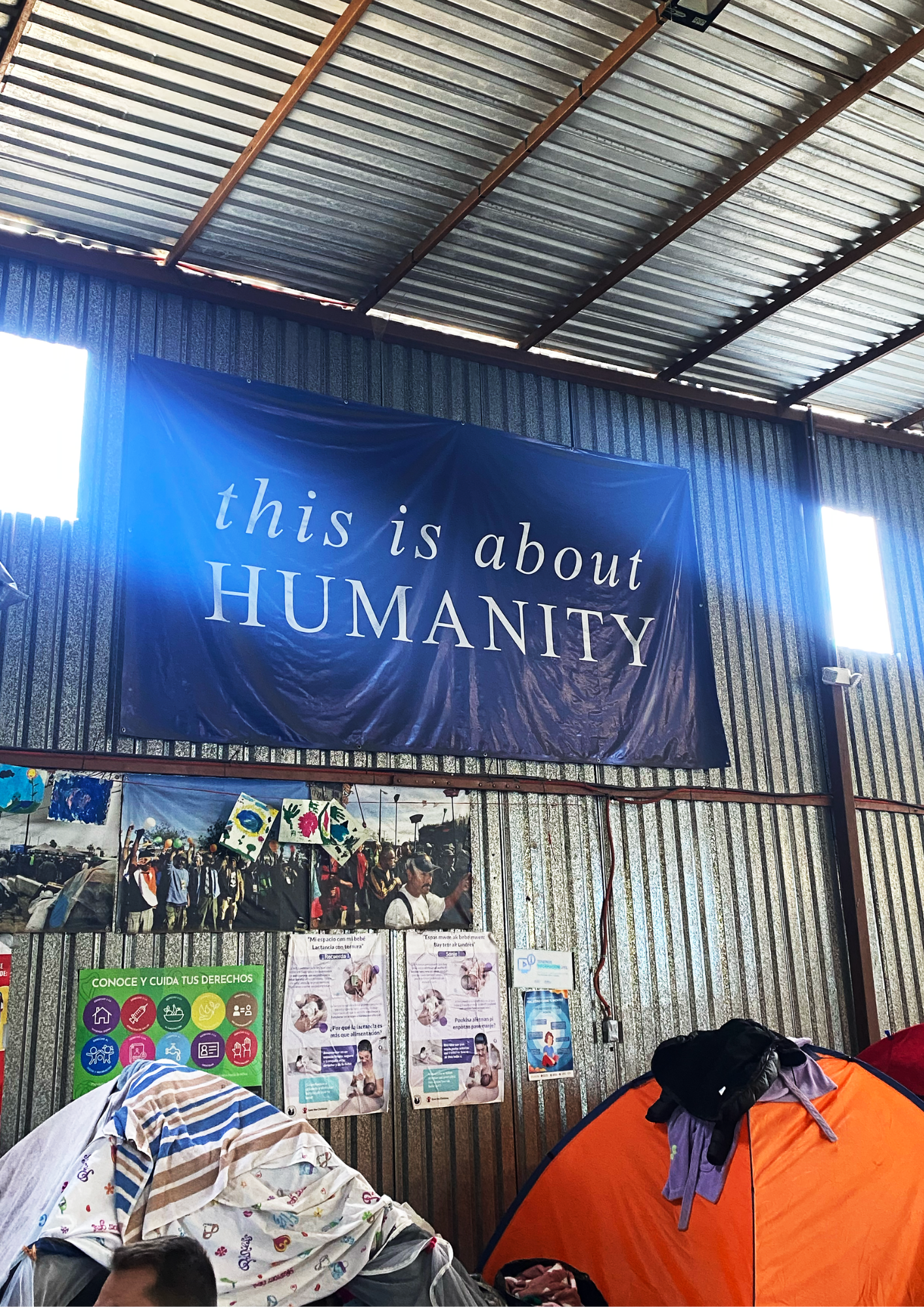
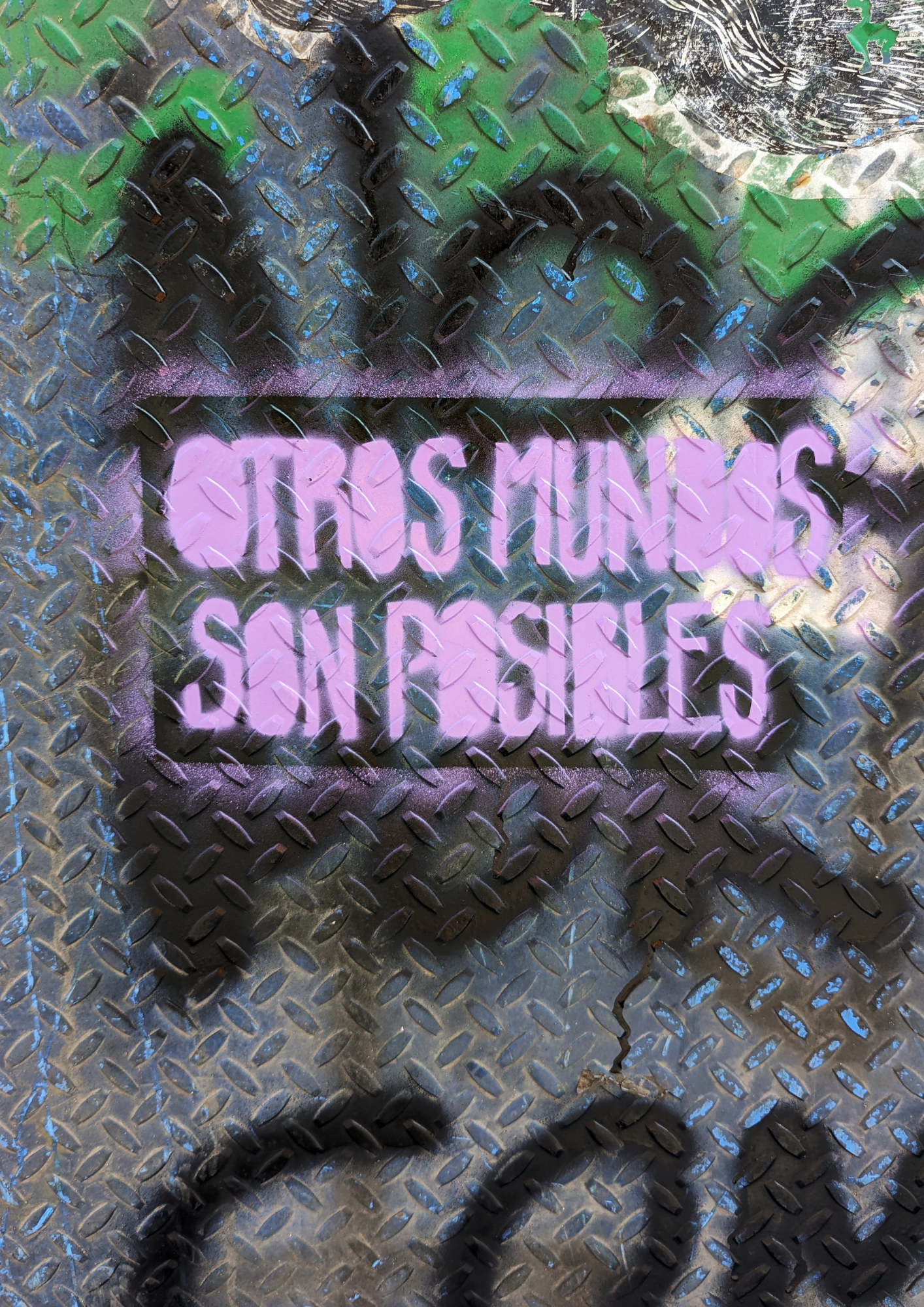
Hidden in spaces where you have at times even 2.000 people living together, where privacy, safety, and predictability seem luxuries, where services can be discontinued at any given moment and with no clarity on what the future holds, people still dare to believe in a better world for all of them. “Otros mundos son posibles” (Other Worlds Are Possible) stands as a reminder that we all deserve the right to a decent future.

With 16 years of experience across non-profits and government, Anca Drăgoi brings deep expertise in leadership and project management. Anca joined Commit Global to leave a mark on international cooperation and sustainable humanitarian action. Her experience and 360 degree view on humanitarian assistance have powered our capacity to respond effectively and connect with all our partners in the field.

Ana Blidaru has brought decades of experience from building communities, non-profit organisations, and initiatives to Commit Global. Her drive to enhance capacity in the non-governmental sector has been paramount in bringing together technology and civil society. Her incredible energy marks every new project and initiative we start and has been vital for the growth of our team.
Now think of water.
For those left vulnerable by life, by war or by disaster, water is more vital than ever.
For those in need our digital infrastructure becomes their lifeline.
Connecting thirst with water.
Connecting the homeless with empty beds.
Connecting the sick with healthcare.
Connecting the lost and scared to vital infrastructure.
At a scale that only technology can unlock.
Helping millions in the few seconds it takes you to fill a cup of water. We build technology that saves lives.
Help us deliver it to those in need.